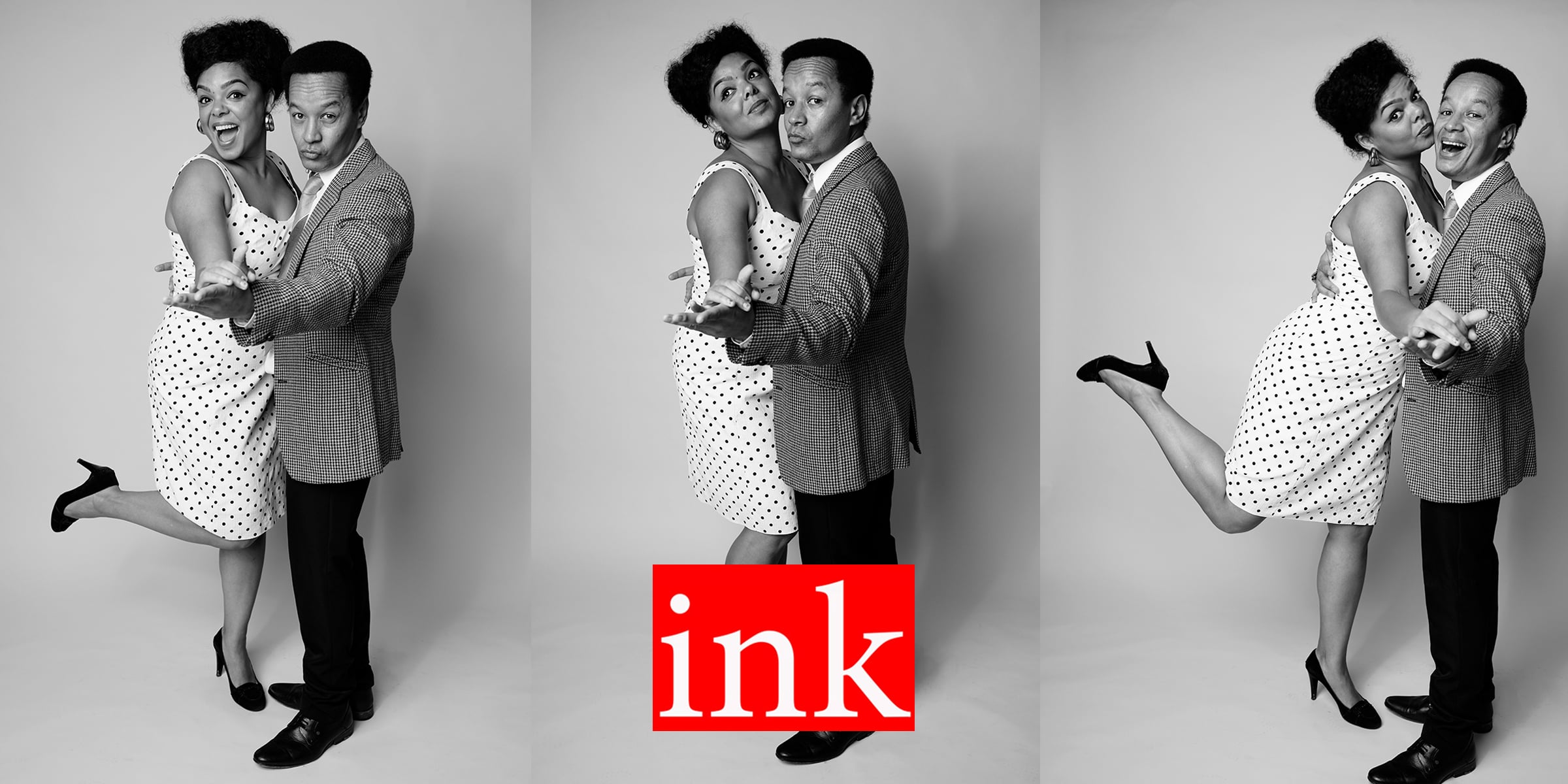
Production: The Stranger By: Wayne Muller Photos: Yazeed Kamaldien
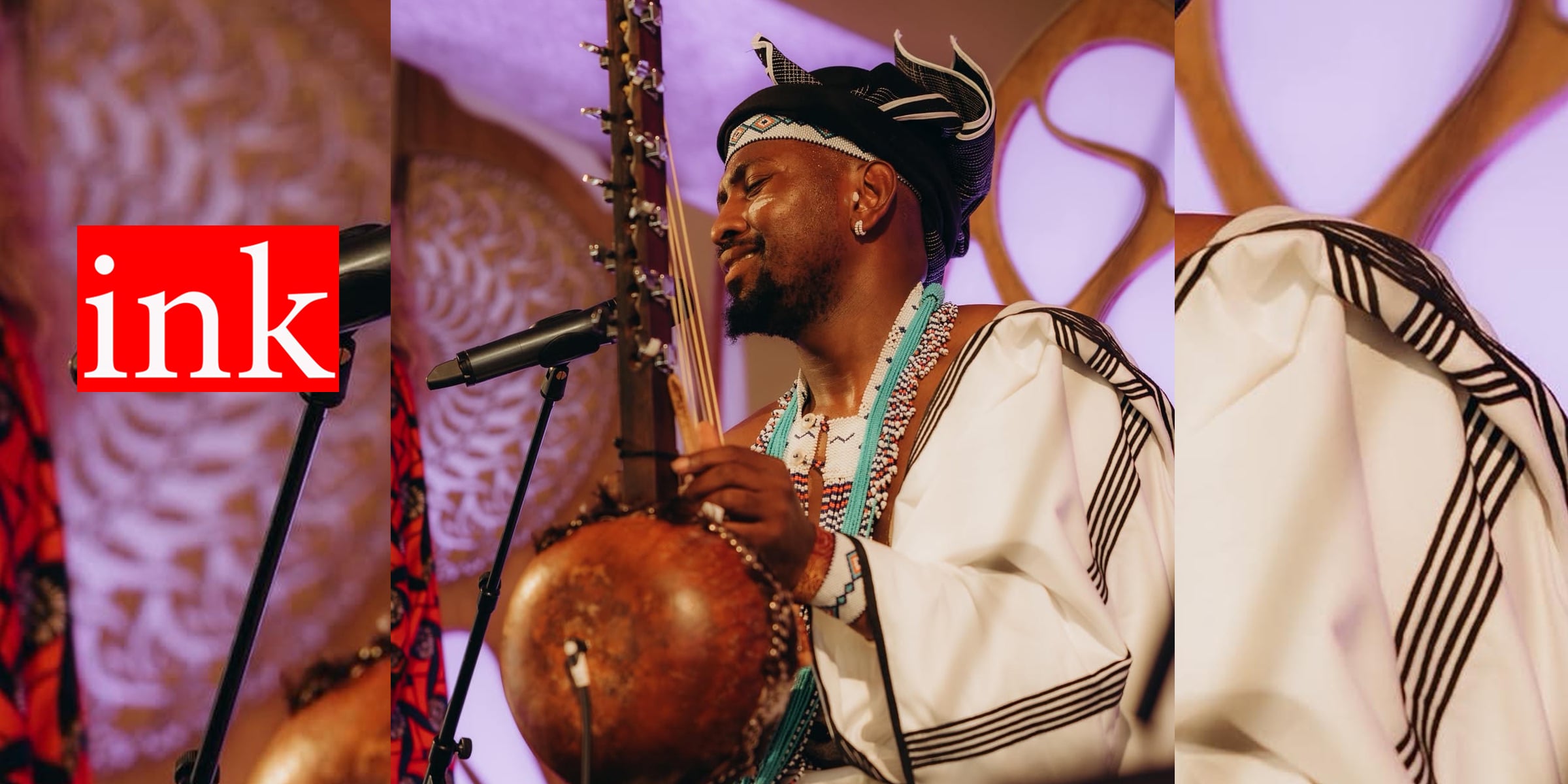
From the myths of ancient Greece to the rhythms of Africa, Dr Nkosenathi Koela brings a fresh sonic dimension to The Stranger, a contemporary retelling of the Orpheus myth that opens tonight under the direction of Brett Bailey. Armed with an array of African instruments and his own compositions, the musician transforms this timeless tale into an immersive musical journey. Wayne Muller spoke to him about the music, the myth and the magic of sound.
Brett Bailey’s FaustX and The Stranger at this year’s Woordfees are “sister productions”, as Bailey calls them. Whereas the former gives us glimpses of the life of Goethe’s popular character Faust, The Stranger introduces Orpheus from Greek mythology as a foreigner arriving in Stellenbosch.
True to the mythological tale, he finds a wife here, but she dies on their wedding day. Orpheus then embarks on a journey to the underworld to save her. “It is a meeting point of sound art, sound healing, theatre, movement, and somatic exploration within an adaptation of a Greek myth set in Africa,” Koela describes The Stranger, for which he created and performs the music.
It’s not a work that one can define in terms of genre or style, but in Orpheus’s world, music and sound stand central. “Sound becomes both an artistic and experiential medium, while movement, the body, story and mythology create different entry points into the work,” Koela says.
With Stellenbosch being the setting, one wonders why this town, why this locality? Apart from being the home of the festival, there must be something meaningful in bringing Orpheus to Stellenbosch.
By placing this ancient story within a recognisable contemporary South African landscape, the questions of love, loss, death, memory, choice and the human relationship with the unknown are brought closer to our own realities.
“The locality allows the underlying moral questions embedded in the story of Orpheus to be reflected back onto the present,” Koela says. “By placing this ancient story within a recognisable contemporary South African landscape, the questions of love, loss, death, memory, choice and the human relationship with the unknown are brought closer to our own realities. Stellenbosch therefore becomes more than simply the geographical location of the festival. It becomes a landscape through which an old story can be encountered again and questioned from a contemporary African perspective.”
Known as an interdisciplinary and multi-genre artist, Koela is also a scholar of African music. But he sees himself less as someone working within a single artistic discipline and more as a practitioner of African ideas and beliefs, calling himself “a custodian of these ways of knowing”. “What I bring into a production such as The Stranger is an understanding that sound, movement, story, culture, material and the body can speak to one another and create a larger field of experience.”
Koela has earned a PhD with a thesis titled The Ngoma Consciousness: IsiNgqi neSandi as existing and accessible tools for healing and therapy in Africa. His research is at the intersection between health sciences, African studies, African music, theatre and performance.
“IsiNgqi refers to vibration, while isandi means sound. At the centre of the research was an exploration of vibration and sound as foundational aspects of the universe and as technologies that can be engaged through African systems of healing.”
Koela says that his creative work continues to explore this relationship between vibration and sound, and he is interested in how one can understand vibration not simply as a physical phenomenon, but as something that is experienced through the body, the environment, consciousness and spiritual systems. “Within specific African healing systems – in my case, Ngoma – these principles can be engaged intentionally for therapeutic and transformative purposes.”
This research therefore continues beyond his PhD, informing how he listens, composes, builds instruments, works with performers, and thinks about the relationship between sound and the body. Says Koela: “The musical direction and composition in The Stranger are part of that ongoing exploration. The sound is not simply there to accompany the theatre; it is part of how the world of the performance is constructed and experienced.”
What I bring into a production such as The Stranger is an understanding that sound, movement, story, culture, material and the body can speak to one another and create a larger field of experience.
While Bailey is responsible for the writing and directing of The Stranger, Koela curates all aspects of sound in the production. He says the music is based on African classical and traditional music and the instruments used come from Southern, Eastern and West Africa, and include the Ngoma drums, marimba, nyatiti, kamale ngoni and kora.
“My approach is not simply to use these instruments as representations of Africa. I am interested in their musical systems, their histories, their tonalities, their physicality and the ways in which they carry cultural and sonic memory. Alongside the live instruments, the textural and ambient sound design creates layers and imprints of sound that build the sonic landscapes of the production. In this way, sound helps to design the world of The Stranger as much as the words, movement, bodies and story do,” he says.
For Koela, the sonic aspect in The Stranger is not merely accompaniment to what happens on stage, but also helps to narrate the story. “Every aspect of the sound is directed towards creating a frequency that deepens the audience’s immersion into the world and sound of Orpheus. My sonic collaborators, Kim Masala and Iman Adams, contribute beautifully to this world.”
Koela describes his collaboration with Bailey as inspiring. They first met during Covid when Koela played African music for a meeting. Bailey contacted him later and wanted him to collaborate on his Constellations project, and later on Samson (performed in 2019 at Woordfees) and now The Stranger.
“It is exciting to work in a space where different ideas, meanings and interpretations can exist and thrive. I think what makes the collaboration work is our dedication to our respective crafts and our mutual respect for art. We do not necessarily need to approach the work in the same way, but there is value in allowing those differences to remain present within the process,” says Koela about his collaboration with Bailey.
So, what would Koela like audiences to take away after seeing a performance of The Stranger?
“I simply want people to explore themselves and the concepts raised by the work: birth, loss, renewal, mastery, sadness, darkness, light, ambiguity, love, sorrow, and the many contradictions that make us human. I don’t necessarily want the audience to leave with a single answer. I would rather they leave with questions, perhaps questions about themselves, their relationships, their choices and their own relationship to life and death.
“For me, life is a song we are all singing. Whether we are off-key or on-key, we are still part of a sacred choir.”
The Stranger 9, 10 & 11 OCT 19:30 The Book Club, Johannesdal R180 | R210 at the door