Production: Die ander dogter By: Tracey Saunders Photos: Nardus Engelbrecht
Die ander dogter captures the truth of the text and the sense of Annie Ernaux as a formidable writer with delicate and luminous precision, writes Tracey Saunders.
When one holds Annie Ernaux’s The Other Girl in one’s hand, it’s surprising that such a slim book can hold so much grief, and yet the 56-page translation of the L’Autre Fille epistolary memoir carries a weighty burden of secrets and loss. The book was originally written in the form of a letter to Ernaux’s deceased sister in response to a call to writers to compose “the letter they’d never written,” inspired by Kafka’s Letter to His Father. Saartjie Botha’s stage adaptation is based on Naòmi Morgan’s translation from French. The truth of the text and the sense of Ernaux as a formidable writer are both captured in this delicate and heartfelt staging.
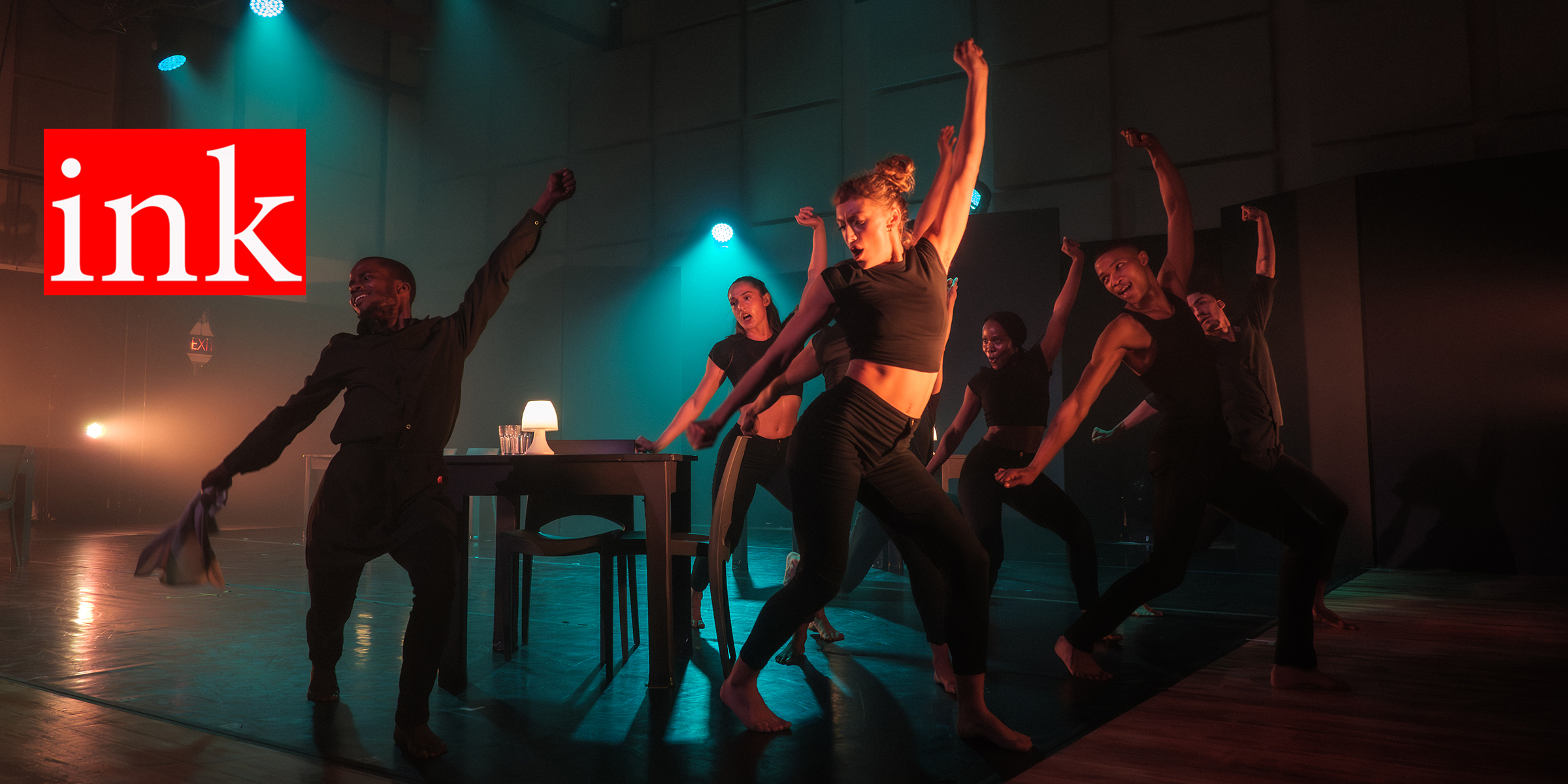
Die ander dogter follows the writer as she writes the letter to her sister. The audience experiences in real time her revelations from the process of writing about the enigma. She explains why she writes as her project of sense-making is made visible. While the Nobel laureate’s text sits at the heart of the piece, Wolf Britz has created a crucible and container that heightens every nuance and reflects the writer’s recollections, some hazy and unclear, and the ethereal experience of her childhood. The circular stage is completely enclosed with a gauze-like fabric onto which photographs are projected. The photographs are included in the manuscript and, given Ernaux’s interest in photography as a lens through which to understand the present and the past (an English translation of The Use of Photography, which she created with Marc Marie, was published in 2024), their inclusion is another aspect of the staging that makes it so compelling.
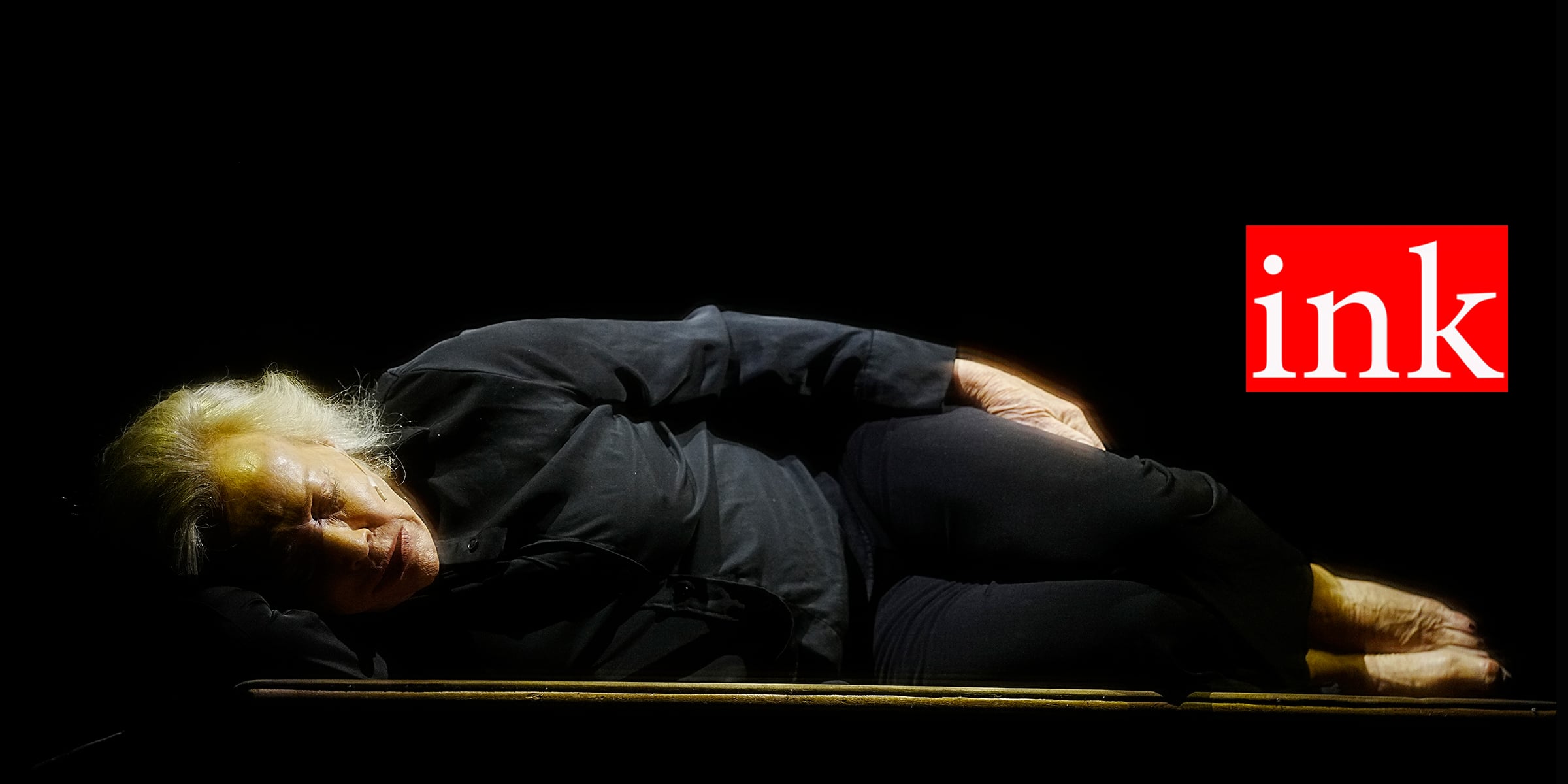
The immediate sense is of watching Sandra Prinsloo through a blurred lens or catching her reflection in a desilvered mirror. The staging brings to mind the sense of “seeing through a glass darkly”, an apt biblical quote given the thread of religion which runs through the text. She is seen through the image of her dead sister, reflecting the way she feels her parents saw her and how she herself imagines her life, in relation to and not wholly apart from her sister. The life of a surviving child after the death of a sibling is an ambivalent experience: one is both loved and wanted, and yet there is always another child whose absence overwhelms your presence. Though never voiced, the realisation that you will never be the sibling that is no longer there lies unspoken in the air you breathe, the conversations that don’t happen and the lies trapped between love never shown.
Ernaux is forever haunted by the sister she never met. At ten, her world implodes when she discovers she is not the first child born to her parents. She is, in fact, “the other girl”, “die ander dogter”, the child born almost three years after the death of her parents’ first-born daughter, Ginette. A death that casts a long shadow. Her recollection of discovering this life-changing fact is related in the same intricate detail in which she remembers that earth-shattering moment. She describes it as the feat of having to “absorb all the scenery in the world to endure what was happening.” Prinsloo sketches the scene so specifically that you too are viscerally reliving that moment under the fading light of a French summer sky. As she reels you in with the quiet certitude of this memory, she casts a spell as you see her life through her eyes, and experience her memories through her pen. She writes the letter which logic dictates will never be read by her departed sister, and yet she holds onto a small hope that perhaps, by some miracle, it may.
The life of a surviving child after the death of a sibling is an ambivalent experience: one is both loved and wanted, and yet there is always another child whose absence overwhelms your presence.
At times Prinsloo is quite matter-of-fact, detailing the basics of her life as the sister who survived. She tells of her childhood littered with ailments and misadventures, her near-death experience with tetanus and her annual visits to the graves where she pays silent homage to her family. She does not drown in grief at the loss of her sister but treads water in the omnipresent grief of her parents. She attempts to explain how “the parents of a dead child don’t know what their pain does to the one who is living” and why she never spoke about her to them. Overhearing the conversation during which she learned about her sister gave her two things: a dead sister and the knowledge that Ginette was both dead and a secret. Maintaining that secret continues right up to and after her parents’ deaths. When her father is laid to rest in the grave alongside her sister’s, that smaller, older grave is ignored.
As she writes the letter, her understanding of her sister changes. She describes writing about her as “nothing more than walking in circles inside your absence”. The circular nature of the set reiterates this notion of writing, a continuous circling of the issue around her sister’s prior existence and her fruitless quest to measure up to her. While their first daughter was their sorrow, Ernaux recalls that she was their hope. In writing the letter, she shares her own hopes, some of which are fulfilled despite herself.
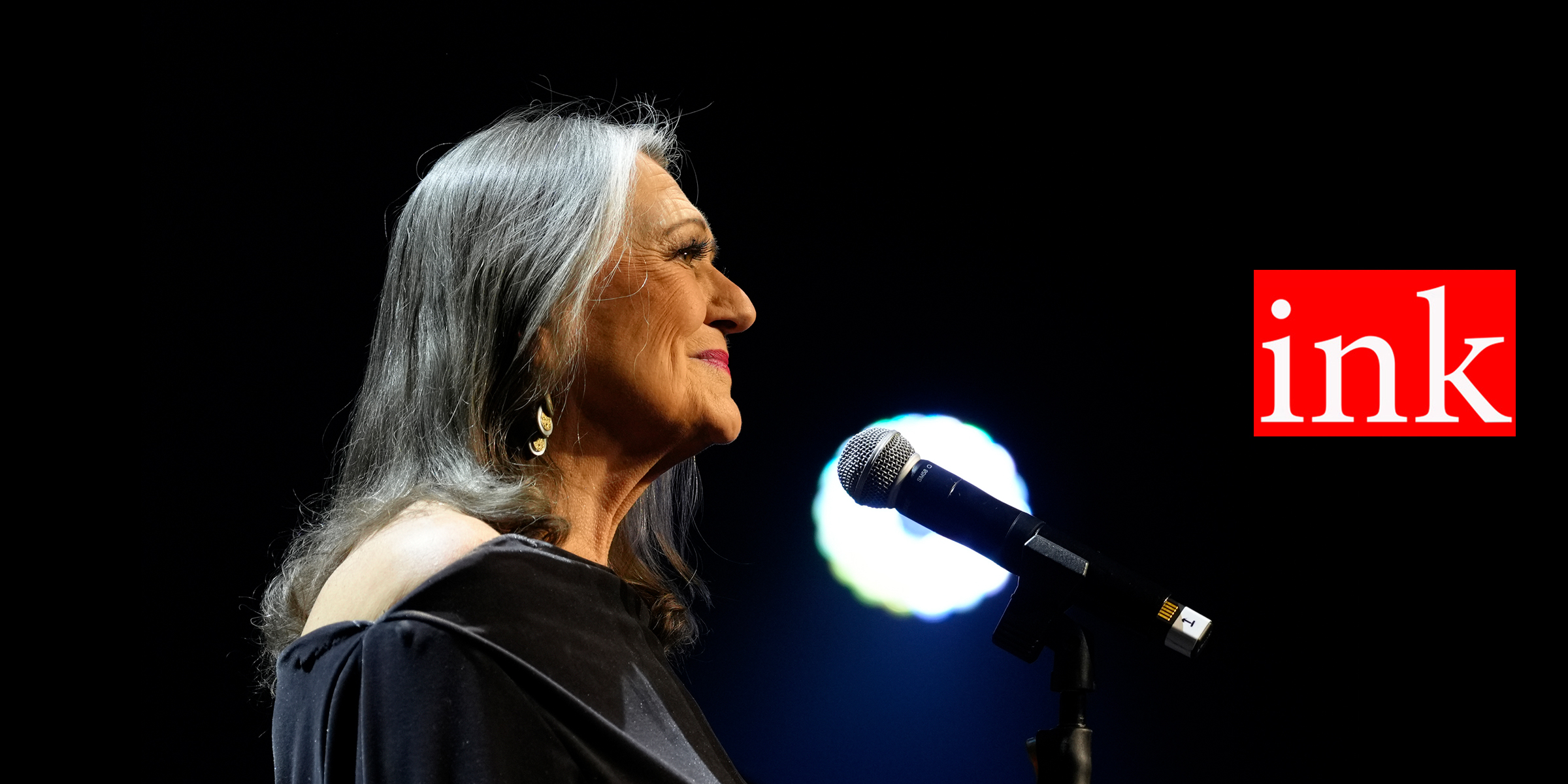
Prinsloo’s performance is guarded; she is removed from the audience and herself, mirroring Ernaux’s sense of feeling removed from life itself as a child, always seeking to justify her presence in the world. Her writing is a way to find a justification for being alive when her sister wasn’t. She captures the trancelike states of memory and writing as she circles her study, occasionally sipping her wine, trying to catch the images around her. She is very real and present but not tangible to us as the audience, perhaps not yet to herself. Towards the end, as the curtain is pulled back, it seems she has come to a realisation of her own substance, a person in her own right and not merely “the other”.
The Nobel Prize in Literature will be announced on the 8th of October. We can hope for two things: that the laureate unearths stories that unravel our hearts and that they are brought to the stage in as impeccable a way as this production has.
Die ander dogter 8 OCT. 13:15 | 8 OCT. 15:30 | 10 OCT. 9:30 | 11 OCT. 17:00 Adam Small Auditorium R210-R350 | R240-R380 at the door