Production: Twee siele, een omhelsing By: Gillian Mitchell Photos: Nardus Engelbrecht
Twee siele, een omhelsing is a tribute to Mark Hoeben, choreographer Ina Wichterich’s tango partner of more than 25 years, who was diagnosed with motor neuron disease. Wichterich honours the history of tango with movement and imagery that extend beyond the bodies on stage, tracing connections across space and time, linking what has been with what is still to come, writes Gillian Mitchell.
In a room bare of all ornamentation, wide-planked wooden floors gleam under low light and a row of gracefully arched windows are flung open, both releasing and inviting exchange. Two men are seated in the windows, gazing outward, waiting, watching, being. Their stillness is echoed by the wheelchair at the centre of the floor, holding a figure both supported and showing signs of physical surrender. The lights dim, a soft thudding rhythm fills the room, and the extraordinary begins.
Often associated with romance and seduction, tango in fact emerged in low-income bars and brothels, in working-class dance halls and along bustling docksides. A meeting point of African rhythms, Cuban influences, Spanish flamenco, European polkas and waltzes, and the Argentine milonga, it is a dance form born of cultural exchange and adaptation. At its heart, both then and now, lies improvisation: a conversation conducted through touch, weight and physical cues. Tango is not a dance of fixed steps, but of listening, responding and moving together in the moment.
This is dance at its breathtaking best – a swirling expression of balance and resilience that shimmers before the eyes and draws the audience into its orbit.
Ina Wichterich honours this history with movement and imagery that extend beyond the bodies on stage, tracing connections across space and time, linking what has been with what is still to come. She approaches tango as a living, evolving language, weaving in musical and movement vocabularies that may depart from the traditional, but never from the heart of tango itself. This is not tango as a museum piece, but as a living practice, carrying its history forward while giving voice to the present.
Shaun Oelf, Ramsay Devin Lewis and Craig Katts embody the spirit of tango in performances that deliver magic. In a work rich with memorable moments, Oelf’s solo defies description. This is dance at its breathtaking best – a swirling expression of balance and resilience that shimmers before the eyes and draws the audience into its orbit.
Katts is mesmerising in performance. Stylish, grounded and utterly committed, he commands attention not through display, but through complete embodiment of the movement and the moment.
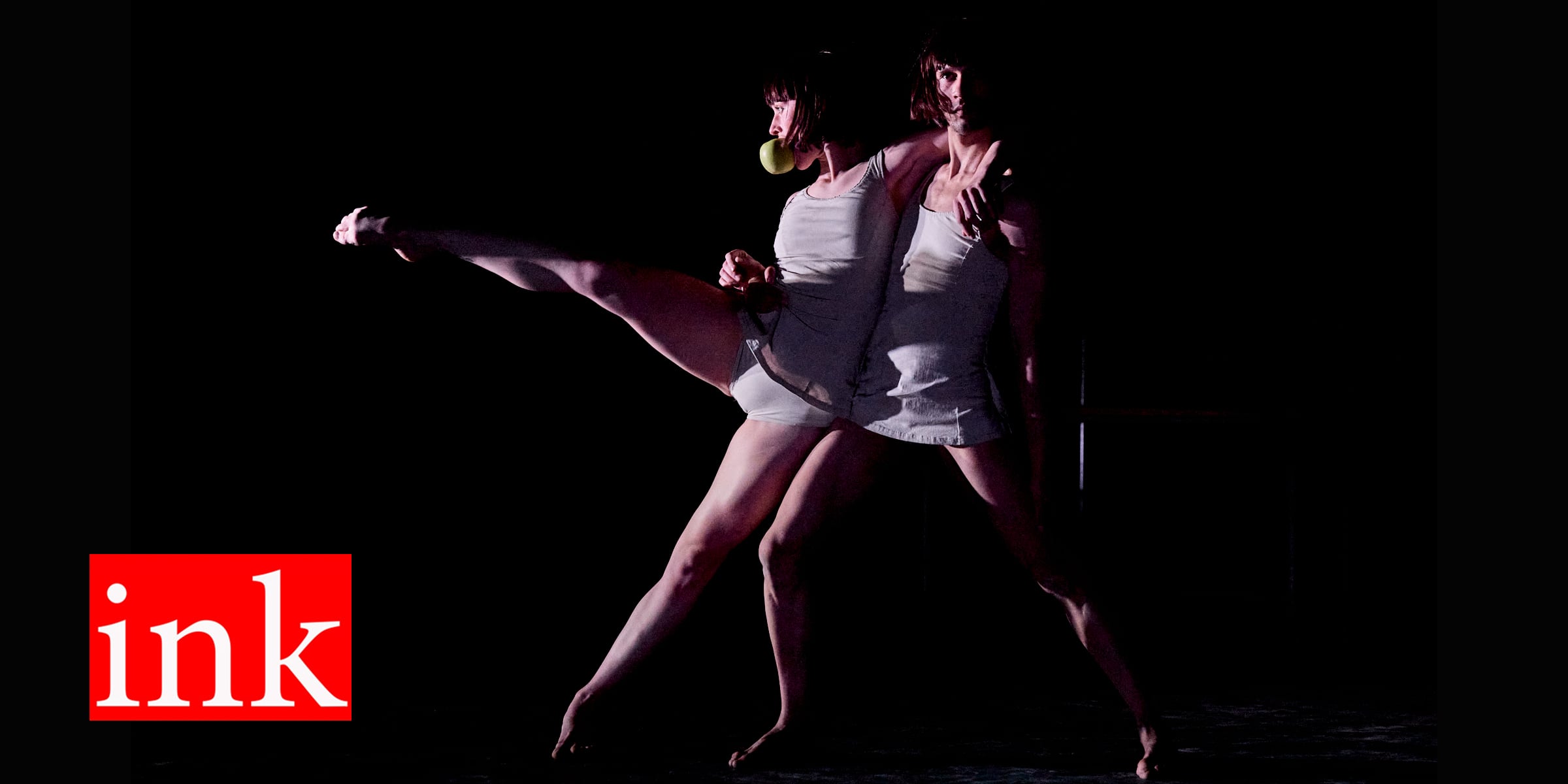
Oelf and Katts reveal tango’s more confrontational edge: its entanglements, tensions and power struggles, in a duet that echoes the early forms of the dance with its traces of combat and machismo. Oelf and Lewis, by contrast, offer a tango built on surrender and trust. Leader and follower shift fluidly from one to the other, exposing the improvisational dialogue for which tango is renowned. Lewis also reveals an intensely dramatic side in a sequence in which he appears to wrestle both with and against his own physicality, accompanied by Mark Hoeben’s distinctive, measured voice describing the effects of motor neuron disease on the body.
Front and centre, this work honours Mark Hoeben, arguably one of the founding forces of tango in Cape Town. Choreographer Ina Wichterich, his tango partner of more than 25 years, pays tribute to this giant of the form, who was diagnosed with motor neuron disease and gradually lost access to the language of body and dance that had been so integral to his life. The soundtrack is interspersed with Mark’s own reflections on how the disease has affected his body, his speech, his perspective and ultimately his life. Yet this production honours his legacy in a way that feels quintessentially Mark: free of self-pity, grounded in fact, tempered with a pinch of humour, and accompanied by the powerful image of bodies in motion. In doing so, it reminds us that none of us knows what lies ahead, and that the present moment is, in truth, all we ever really have.
There is something profoundly fitting in a dance built on improvisation being used to honour a life altered so dramatically by circumstance. Yet, this is not a work about loss. It is a work about connection, resilience and the enduring conversation between bodies, hearts and histories.
Like the tango itself, Twee siele, een omhelsing exists in the space between holding on and letting go. There is something profoundly fitting in a dance built on improvisation being used to honour a life altered so dramatically by circumstance. Yet, this is not a work about loss. It is a work about connection, resilience and the enduring conversation between bodies, hearts and histories. Beautifully conceived and deeply felt, it lingers long after the final movement has faded from view. This is a production not to be missed.
Twee siele, een omhelsing 8 OCT 19:30 | 9 OCT 19:30 Ou Konservatorium R250 | R280 at the door No u/14