SPIER TONEEL
‘Humor maak die donker meer verteerbaar’
Produksie: An Iliad
Deur: Marina Griebenow
Foto’s: Verskaf
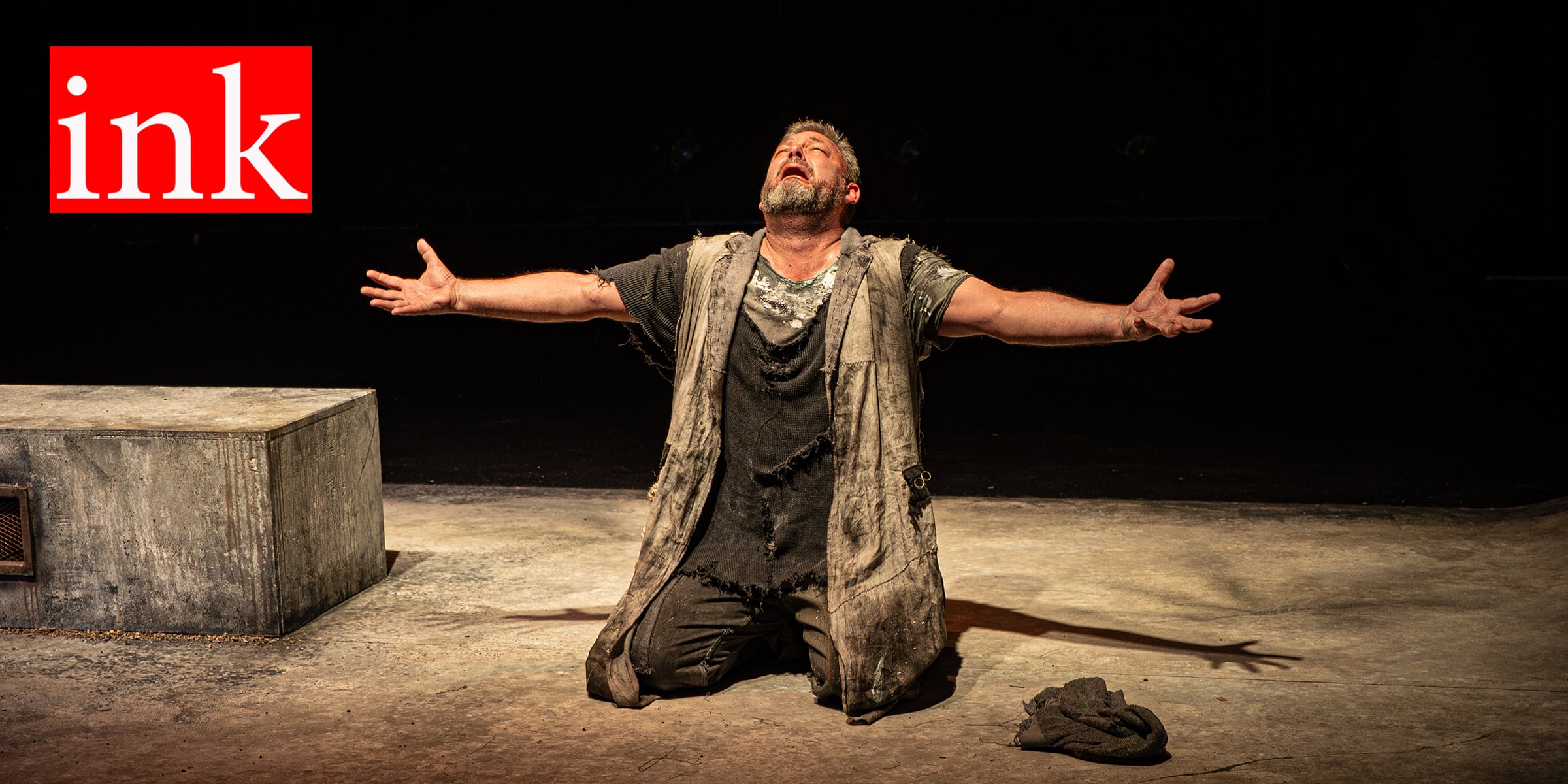
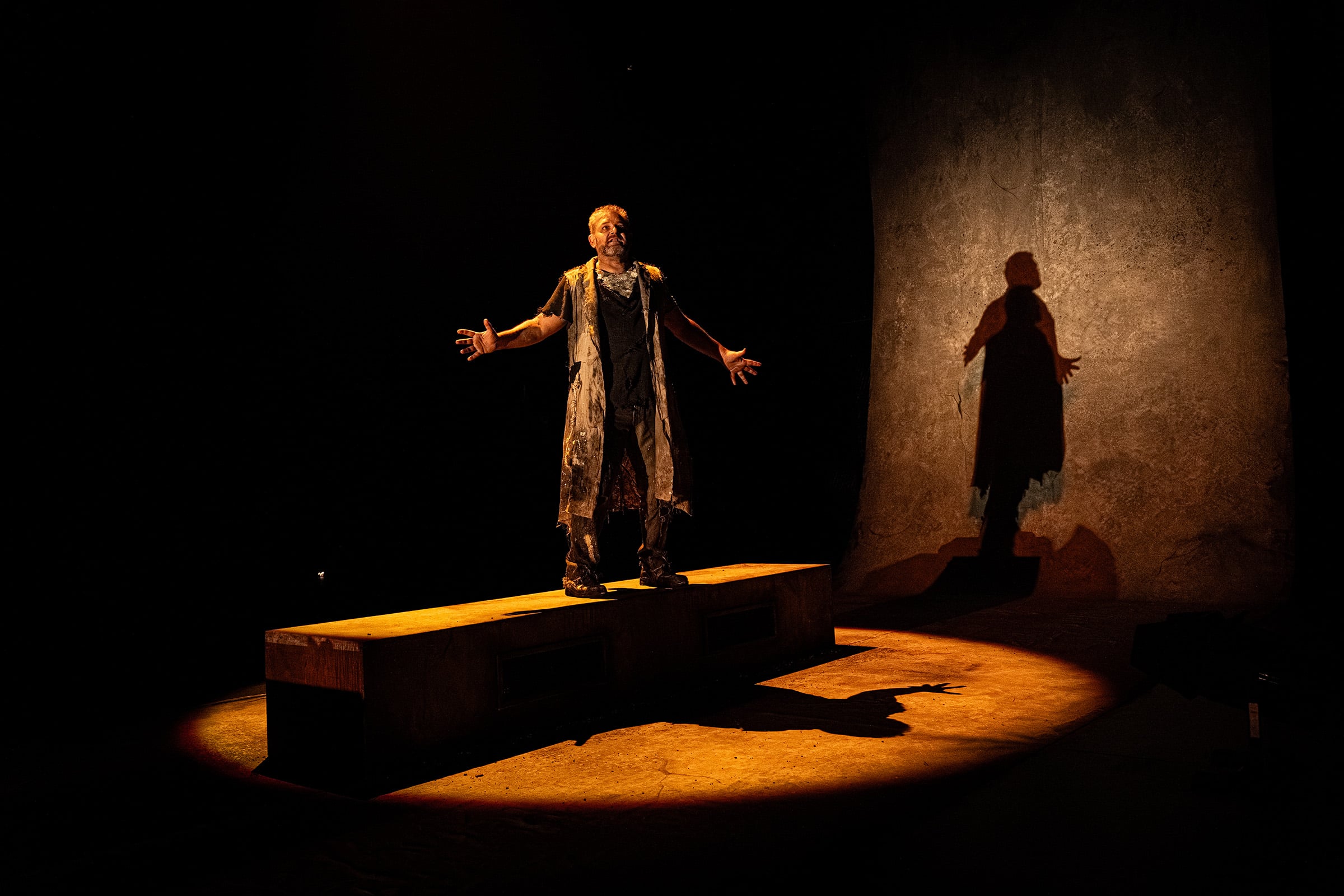
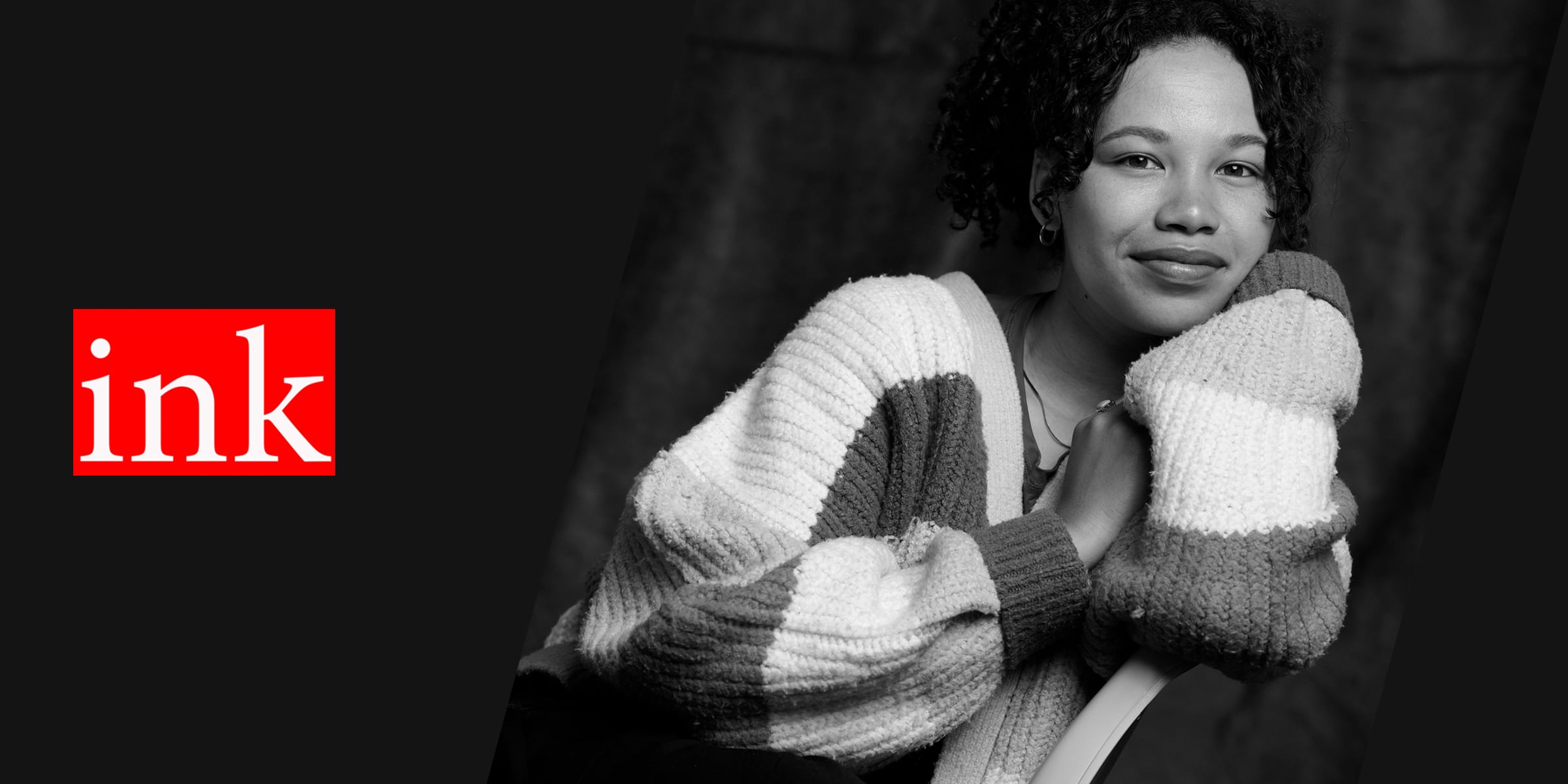
Die geliefde grapjas Alan Committie is vanjaar vir die eerste keer by die Toyota Stellenbosch Woordfees in sy hoedanigheid as ernstige akteur. Marina Griebenow het hom uitgevra oor sy kragtoer-vertolking in An Iliad, ’n uitstekende verwerking van Homerus se epiese gedig.
Mense vergeet dikwels Alan Committie is saam met onder andere Robyn Scott en Terence Bridgett deel van ’n formidabele groep akteurs wat in die jare negentig aan die Universiteit van Kaapstad hulle dramagraad voltooi het. Boonop doen Alan steeds die meeste van sy komedies onder spelleiding van emeritus professor Chris Weare, wat nog vir baie van sy oudstudente ’n mentor is.
In 2008 ontvang Alan ’n Fleur du Cap-toekenning vir sy spel in Tom Stoppard se Rosencrantz and Guildenstern Are Dead en in 2020 stap hy weg met ’n Fleur du Cap-toekenning vir sy vertolking van die hoofrol in Shakespeare se Richard III, sy jare lange droomrol.
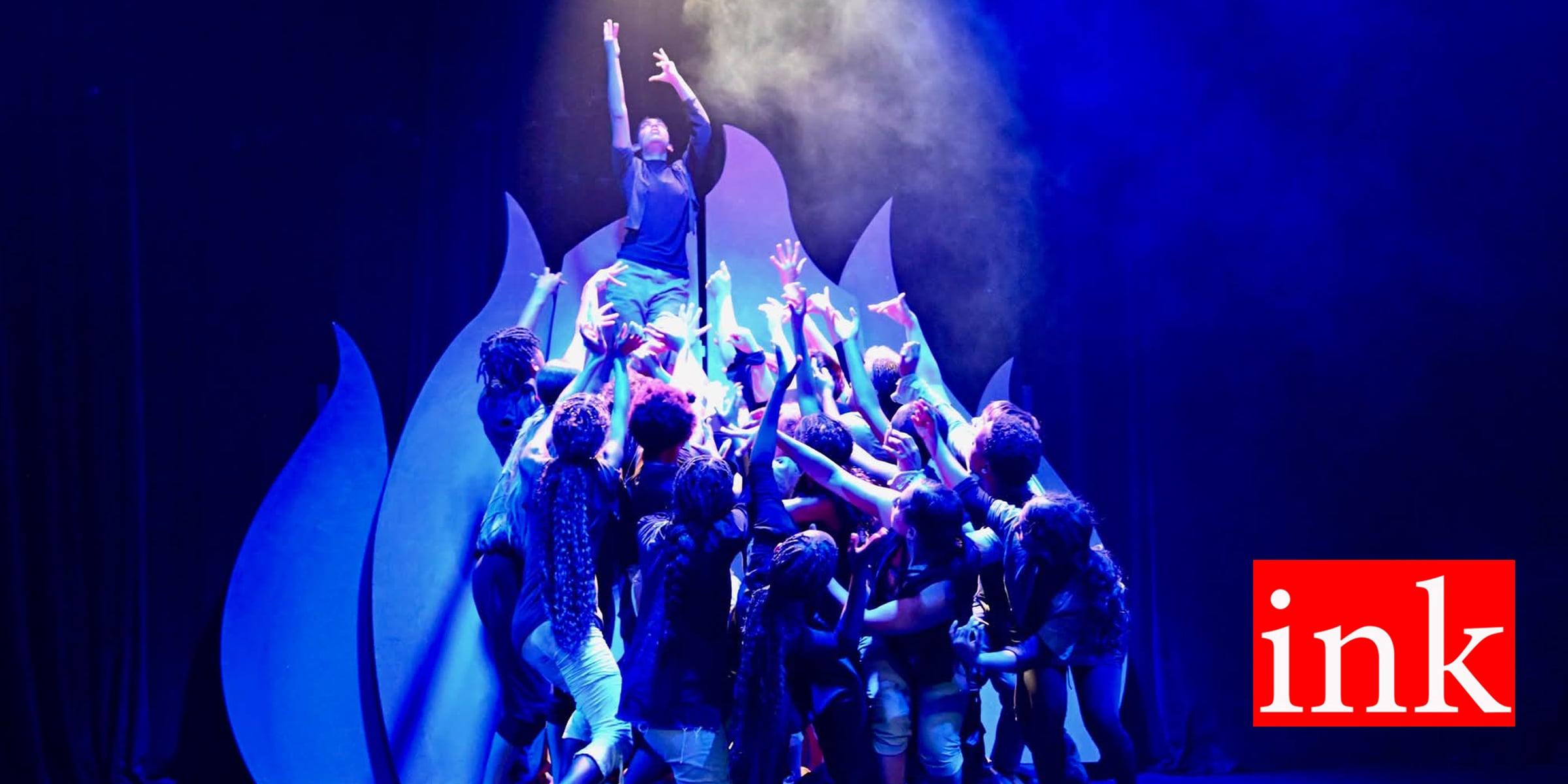
In An Iliad ry die dramaturge op die jaspante van Homerus met die Trojaanse oorlog as vertrekpunt. Dit is egter ’n meer moderne, maklik verteerbare weergawe wat dit deurtrek na alle oorloë oor die eeue heen tot by hedendaagse konflikte. Diepsinnig en dringend vra hulle waarom die mens eenvoudig aanhou oorlog maak.
Alan vertolk die rol van die digter-verteller en Charl-Johan Lingenfelder is die muse. Danksy die regisseur, Geoff Hyland, se fyn oog vir detail, sit Charl deurgaans hoog agter op die verhoog, soos Zeus op berg Olimpus, van waar hy die ongelooflikste klankbaan verskaf vir die “goeie storie” wat die digter die gehoor aan die begin belowe.
Wat was dit omtrent An Iliad wat jou laat besluit het om dit aan te pak? Was dit die buitengewone uitdaging om die digter-verteller te speel, die onderwerp, die skryfwerk self of iets meer persoonliks wat jou laat sê het: “Ek móét dít doen”?
Two things happened at more or less the same time: I was offered a slot at the Baxter Theatre to produce and/or act in something. Geoff Hyland and I explored a couple of options, but in view of the current financial environment, anything bigger than a two-hander text was proving to be cost-prohibitive.
In October 2025, I also travelled to Greece for the first time and was deeply moved by Athens and its immense history. I spent a five-hour afternoon on top of the Acropolis with a close friend who proceeded to tell me about the stories that came out of The Iliad and The Odyssey. As night fell and we returned to the city, I remember mentioning that I had tried reading a text based on The Iliad a year before that seemed vaguely interesting and that I now had to read it properly when I got home. I did just that.
Moments of inspiration, creation or impulse can only “land when they land”. I am a firm believer in being open to the right thing at the right time. Lisa Peterson and Denis O’Hare have written a remarkable version of Homer’s famous tale and it resonates today perhaps as much as it ever has. Our world is in a constant state of war and conflict, both horrifyingly literal and terrifyingly figurative.
I gave An Iliad to Geoff to read and he was immediately hooked too. We both saw a way of doing this theatrically. It also allowed me to share a perspective on war through the art of live performance, which is, most often, the only real way I know to express myself accurately.
The challenge of doing a dramatic solo show for the first time (all the others have been of a strong comic nature) appealed and the final piece of the puzzle was when one of my favourite theatre-makers, Charl-Johan Lingenfelder, read the script and immediately replied that he was on board. It felt criminal not to make this piece of theatre. And I am very grateful that we did.
An Iliad reminds us that the old stories cannot just be discarded. We need to interrogate why we keep living them over and over again.
An Iliad is op die oog af ’n antieke verhaal oor die Trojaanse oorlog, maar die toneelstuk vra eintlik waarom die mensdom aanhou oorlog voer. Watter idee of tema in die stuk spreek die sterkste tot jou en hoop jy die gehoor sal met hulle saamneem?
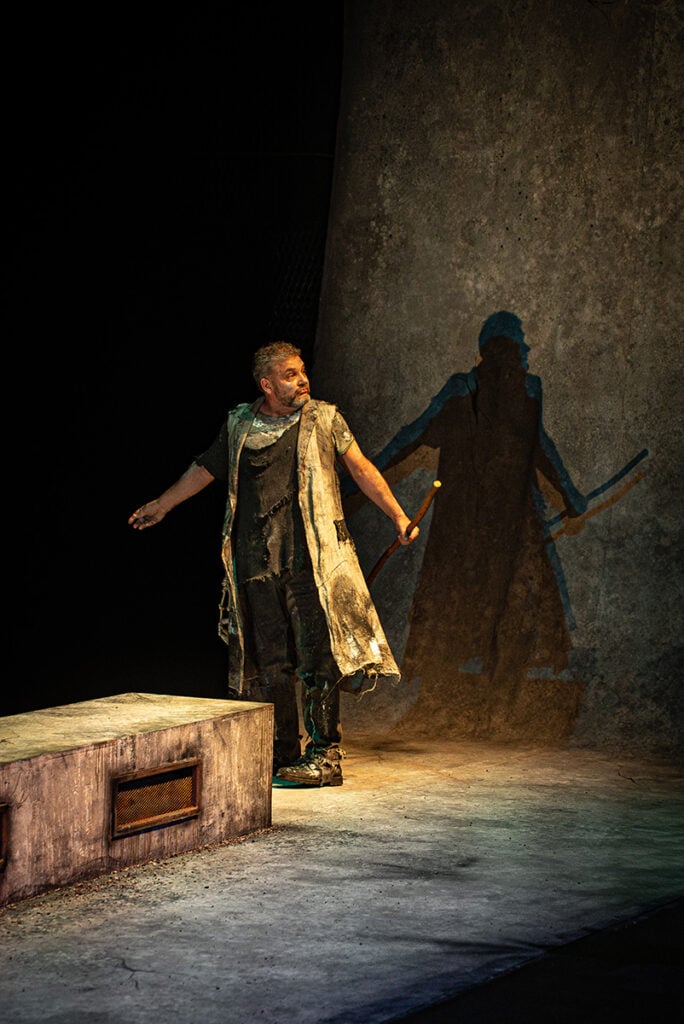
There is a remarkable tension within The Poet, a kind of timeless war correspondent who has experienced seemingly every conflict through history and is compelled to “sing” or share his stories of what he has seen and heard. The Poet recognises the horror and futility of war, but also understands how violence and power can overwhelm at times and create an avalanche of almost psychotic behaviour in even the best of us. And that, coupled with the whimsy and erratic chaos that the “gods” create around us, means that humankind is stuck in an endless cycle of conflict and a battle for dominance.
The Poet can only sing about what he has seen to show the audience he is playing to (on that day in that moment), so that they can perhaps shift their perspective. The phrase “You see?” is used numerous times in various ways in the text.
As in all trauma and horror, there are tiny moments and shades of humour, incongruity, immense humanity and areas of grey that suggest that even the most despicable acts have a context. Does it condone the act? Never.
But our world events turn on the most subtle and nuanced of contexts and yet are often reported or judged in the most biased and polarised ways. An Iliad reminds us that the old stories cannot just be discarded. We need to interrogate why we keep living them over and over again.
Jy is as klassieke akteur opgelei, iets wat dalk nie algemeen bekend is aan gehore wat jou hoofsaaklik met komedie vereenselwig nie. Hoe was die reaksie van mense wat deur An Iliad hierdie ander kant van jou teater-identiteit ontdek het? Het jy al ’n bepaalde gehoorreaksie beleef wat jou verras of geraak het?
This is now almost my 12th year of doing theatre roles that are very different from my usual fare of stand-up and farce. By being part of musicals like Little Shop of Horrors and The Producers, operas (The Merry Widow and Die Fledermaus) or taking on dramatic roles in Richard III, Who’s Afraid of Virginia Woolf?, Oleanna, Amadeus, and others, I have tried to curate a career in which I can challenge myself, delight in playing across genres and try some of the great classic plays and roles available.
Live performance of any nature interests me. The fact that stand-up comedy was the way in which I initially built a fan base and a foundation for my creative work is still a joy to me. I get to tell jokes and then, when the acting itch arrives, I get to flex different muscles and play in an ensemble until – inevitably – at some point I need to tell some jokes or pull a silly face again.
The response to An Iliad, though, has been overwhelming. Of course, those who have never seen me doing a dramatic role are surprised, perhaps disorientated, but then relieved when they realise another kind of experience is also possible. And that can be entertaining in its own way.
Een van die merkwaardigste dinge omtrent dié produksie is hoe jy binne ’n asemteug beweeg van verteller tot kryger, koning, god, slagoffer of getuie. Wat was die moeilikste aspek van daardie transformasies om te bemeester? Was dit die enorme hoeveelheid teks, die fisieke eise, die emosionele reis, die onderskeid tussen karakters, of om die regte ritme vir die storie te vind?
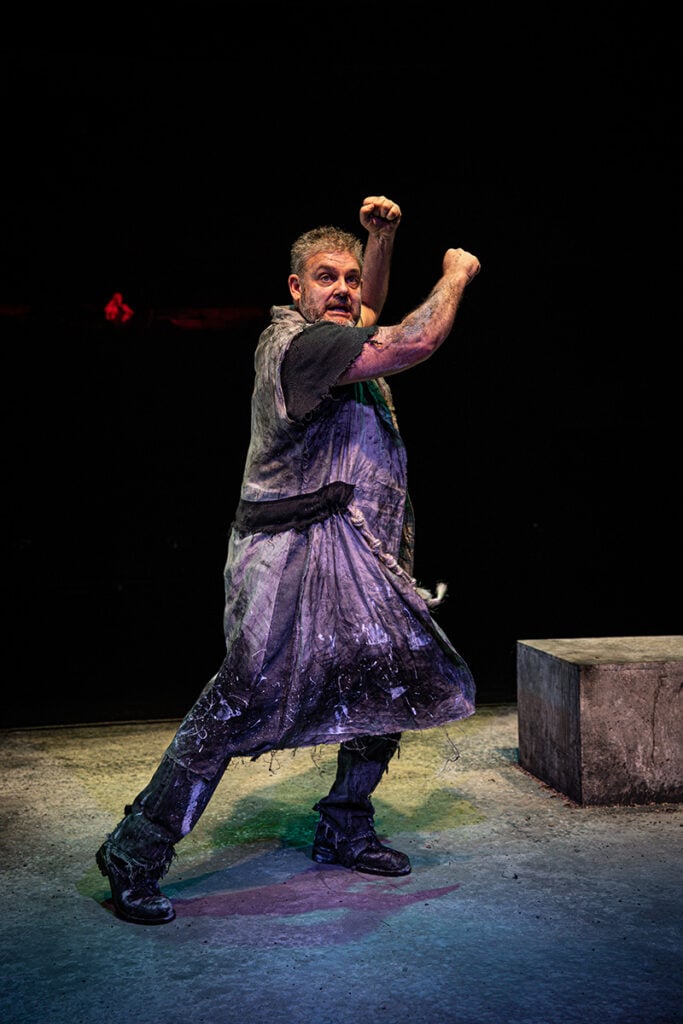
Yes to all of this! In finding my authentic voice for The Poet, all the physicalisation, rhythmic riffs, ancient Greek recitations, character play and comic interludes were aided by years of training and playing. But the quieter storytelling bits were about learning stillness and simply being in front of the audience, which stand-up comedy demands of you too, albeit in a different way.
Vertel ons van die verhouding tussen jou, die regisseur, Geoffrey Hyland, en Charl-Johan Lingenfelder. Julle het iets geskep wat meer voel soos ’n gesprek tussen drie persone – die digter, die regisseur en die muse – as bloot ’n konvensionele verhouding tussen regisseur en akteur met toevalsmusiek. Hoe het daardie samewerking tydens repetisies ontwikkel?
Geoff and I have created together on a number of projects and I love his style of finding authenticity even in moments of heightened theatricality. Charl is a genius. There is no other way to describe him and he is a peak collaborator. It meant that the three weeks and a bit we spent on the floor were some of the most joyous I have ever experienced. There was lots of listening from all three of us. Gentle prods in different directions and then an organic settling of what told the story best. An Iliad can be told with no music. But when Charl’s soundscape is added, it elevates and heightens and then grounds and envelops the storytelling. It is a thrilling thing to be an actor when you are held by a director like Geoff and a sound wizard in the form of Charl.
An Iliad maak sy verskyning op ’n interessante kulturele oomblik aangesien die rolprent The Odyssey tans nuwe belangstelling in Homerus en die antieke Griekse epiese gedigte aangewakker het. Dink jy ’n produksie soos julle s’n kan mense op soortgelyke wyse terugstuur na Homerus? En wat dink jy bied An Iliad wat ’n grootskaalse rolprent soos The Odyssey nie kan bied nie (en andersom)?
I was actually delighted by the number of people who said that they wanted to know more about Homer, the classics, Greek gods and other interpretations of this story. I also love how many younger people in the audience (learners and students) were either surprised by their knowledge of the classics or spoke of wanting to know more. Perhaps it should not be a surprise – Marvel and DC superheroes have their origins in the Greek and Roman gods and titans. There are no new stories.
Humour is vital in making darker, heavier texts palatable. And, of course, the higher the moments of levity, the harder and longer the fall when it comes.
Die toneelstuk laat die afstand tussen antieke Troje en die moderne wêreld verdwyn. Waarom dink jy kan ’n verhaal wat duisende jare oud is steeds vir ’n hedendaagse Suid-Afrikaanse gehoor so herkenbaar voel? Is dit omdat mense in wese nie verander het nie – het ons woede, ambisie, jaloesie, verdriet en fassinasie met geweld basies dieselfde gebly?
Like Shakespeare’s works, these heightened texts and stories contain and often originate the themes of all great stories. Context might change, but our actions and wants are often just cyclical.
Jy het byna 30 jaar daaraan bestee om die dissiplines van stand-up te bemeester – tydsberekening, ritme, gehoorinteraksie, improvisasie en die vermoë om ’n hele ouditorium se aandag te hou. Hoeveel van daardie ervaring het jy ontdek is oordraagbaar na An Iliad? En omgekeerd: Moes jy doelbewus van die instinkte onderdruk wat jou so ’n suksesvolle komediant maak? Is die vermoë om ’n gehoor te laat lag nie soms ook ’n manier om hulle te kry om te luister nie?
All of it was valuable, useful and used in some shape or another. Stand-up comedy is the purest and most direct form of storytelling. There was no need to suppress but rather to invert the skill. The same intensity and authenticity that is needed to land a joke can be used to act a dramatic moment.
Humour is vital in making darker, heavier texts palatable. And, of course, the higher the moments of levity, the harder and longer the fall when it comes. I love texts that offer great tragedy but couched in moments of humour. Richard III, Rosencrantz and Guildenstern Are Dead, Who’s Afraid of Virginia Woolf? and Amadeus all have it. As does An Iliad. Humanity is a combination of all things light and dark. One cannot exist without the other.
The gift of An Iliad is that I have fallen in love again with storytelling in its most basic form. It has inspired me to start writing another solo show that I will hopefully perform when the time is right. I was also reminded of the power of authenticity and true collaboration.
3 OKT 20:00 | 5 OKT 15:00 | 8 OKT 16:00
Open Window-kampus
R220-R320 | R250-R350 by die deur